
HOLISTIC MOTHERHOOD
Why I Choose Intentional Over Perfect Every Time
July 04, 2026·7 min read
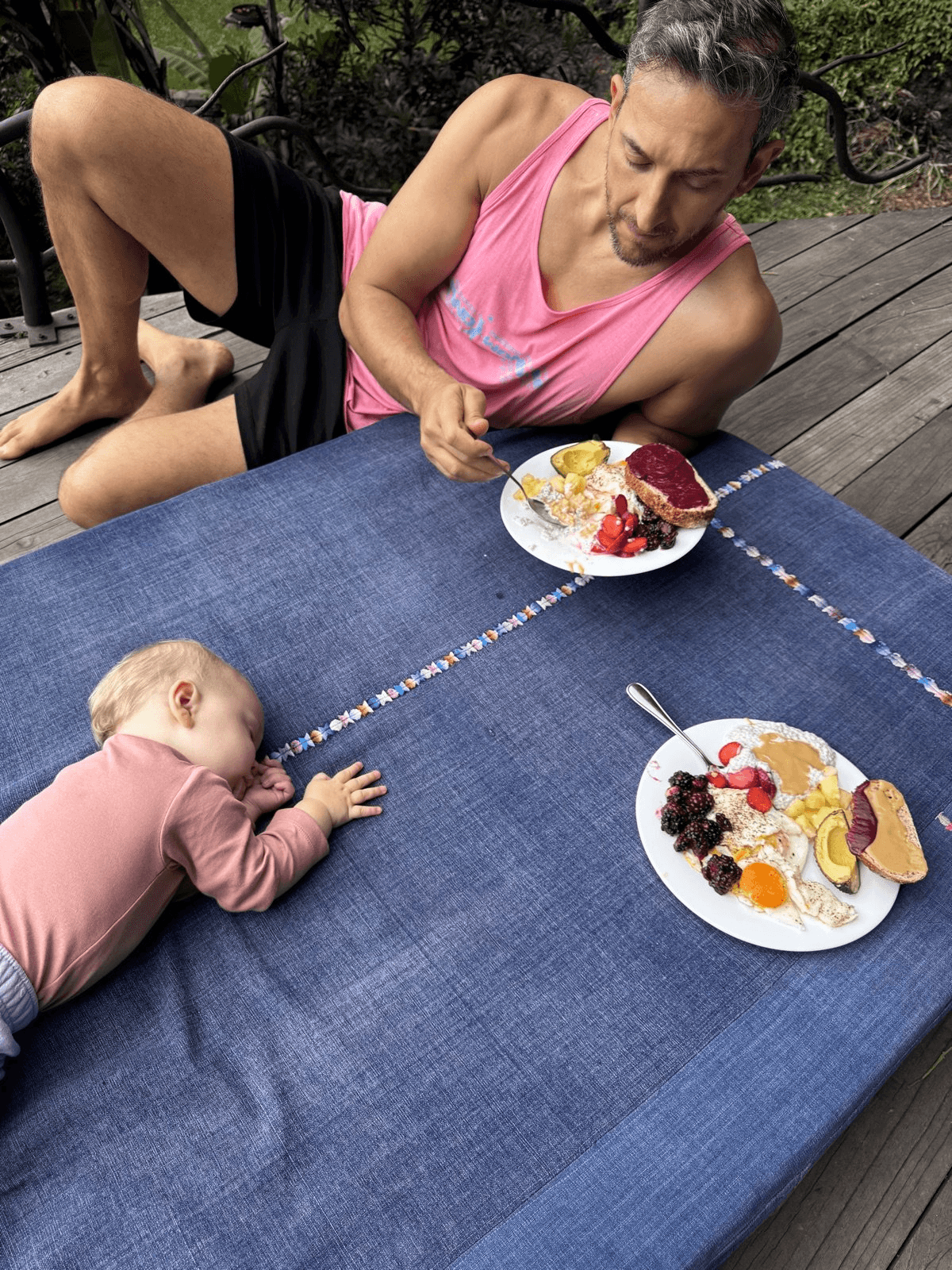
Parenting, Intentional Living, Attachment Parenting
Narrated on the move. Minimally edited. Completely real. This is a window into what it looks like to choose intentional parenting over perfection, day after day, in the very real, very messy, very human moments of raising a child.
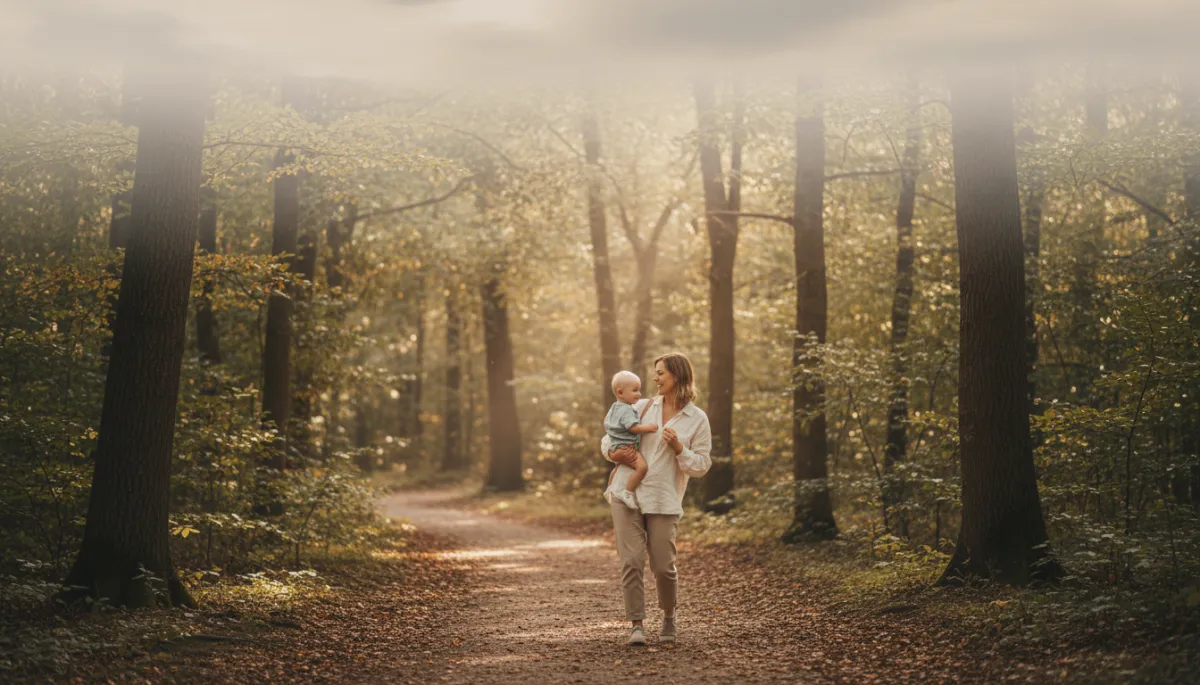
This Is Not a Perfect Parenting Blog
I am not here with color-coded routines or a five-step system that will finally make your home calm and your kids compliant. I am not going to pretend I have cracked some secret code to motherhood, because I have not. What I do have is a choice I keep making, over and over again: I choose intentional over perfect every single time. That choice is the backbone of how I am raising my daughter, Evie, and it is the reason this space exists at all.
Intentional parenting is not about getting it right; it is about being awake to what you are doing and why you are doing it. It is asking, in the middle of the chaos, “Is this aligned with what I believe about children, about health, about being human?” It is showing up as honestly as you can, even when that honesty is messy, tired, and hanging on by a thread.
It started before she was even born.
Ever since I got pregnant, it was never really a question of how I was going to raise Edie. Something in me already knew. I knew I would respond to every cry. I knew I would baby-wear instead of defaulting to a stroller in those early months. I knew we would co-sleep - which, if you are not familiar, simply means sharing a bed - and I knew I would breastfeed as long and as naturally as possible, without introducing bottles or formula unless absolutely necessary.
None of that was a decision I agonized over. It was more like... a remembering.
I think a lot of that comes from my background. As a holistic nurse, a personal trainer, a nontox-lifestyle person at my core - all of those things are rooted in the same philosophy. Trust the body. Work with nature, not against it. Remove the interference. So when I became a mother, those values just extended naturally into how I parent. It felt intuitive. And I am genuinely grateful for that because I know not everyone feels that pull so clearly.
If you want to go deeper on where that inner knowing comes from, I wrote a whole post about it: Strengthen Your Intuition: Holistic Wellness Guide.
Attachment parenting is not a trend. It is biology.
Here is what I keep coming back to: babies do not have a fully developed nervous system. They cannot self-regulate. They cannot self-soothe in the way we like to pretend they can. When a baby cries and no one comes, they do not learn independence - they learn that the world is not safe and that their needs do not matter. That is not a philosophy. That is neuroscience.
So it does not make sense to me to do parenting any other way than attachment style - being responsive, being attuned, paying attention to the small cues before they become big cries. Yes, it is tiring. Yes, it asks a lot of you. But I keep asking myself - why did I become a parent if not to actually raise my child? This season of needing us so much is only a few years. In the scheme of an entire life, it is nothing. And what we build in those years - the security, the trust, the felt sense of safety - that is everything.
📌 Key Takeaway: The early years are short, but the sense of safety we build in them lives inside our children for a lifetime.
Montessori taught me to get out of her way.
As Evie has gotten older, it felt completely natural to bring in a Montessori-influenced approach. And what Montessori really means to me at its core is this: meet the child where they are. Watch before you step in. Be a guide, not a director.
I am not here to teach Evie how to be a person. I am not here to tell her what to do and what not to do based on my own projections of what is safe or appropriate or typical for her age. So much of what we limit our kids from comes from our own minds - our own fears, our own stories, our own idea of what a child should or should not be capable of. And those limitations are ours, not theirs.
My job is to help her navigate the world safely - not to shrink her world down to what makes me comfortable. If she wants to climb something, my question is not "should she be doing that?" My question is "how can I help her get there safely?" That shift changes everything.
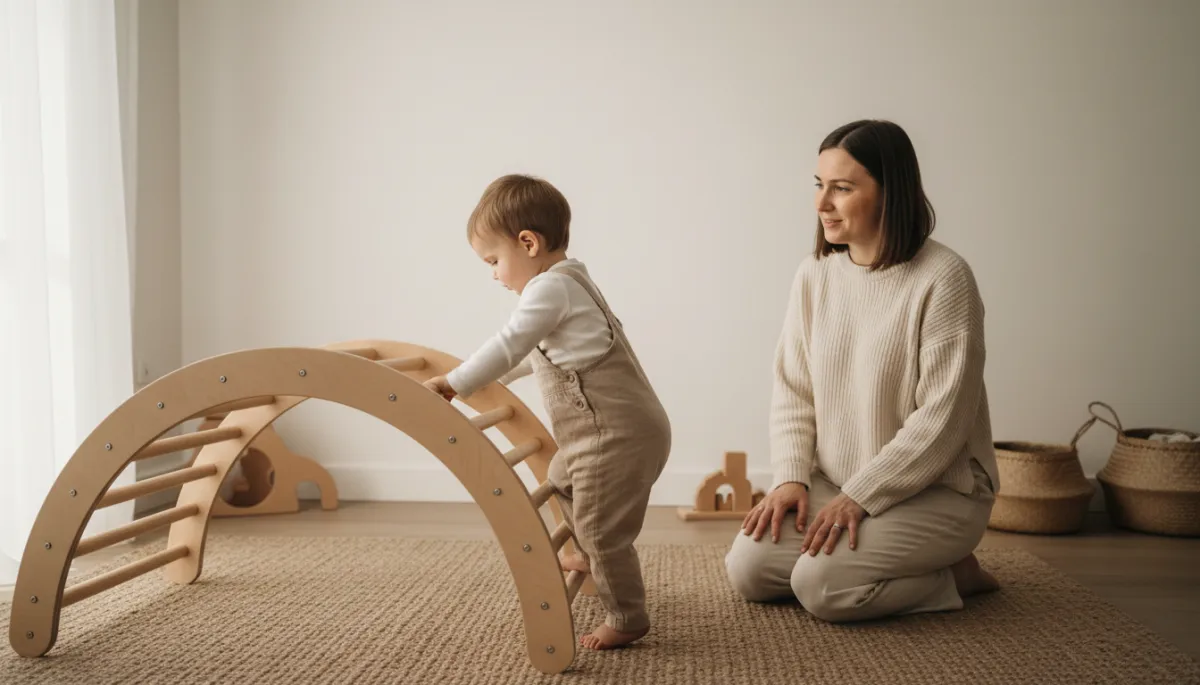
Trusting her abilities while staying close teaches both courage and safety.
On the subject of screens - I have seen enough.
I want to talk about this because I feel strongly about it and I think it needs to be said plainly.
Everything in this world that is designed to take away discomfort in the moment has repercussions down the line. That is true for adults and it is especially true for children. A lot of what we hand our kids - the toys designed to constantly stimulate, the apps, the shows - they are pain relievers. They work immediately and they cost us later.
Screens are the most concerning of all, especially under two. What they do to a developing brain at that age is not reversible. The neural pathways being formed during those early years are being shaped by whatever they are consuming most. And I have seen it firsthand - a family member's child, not even two years old, completely locked into a screen. The moment it was taken away, an immediate and intense meltdown. And I thought to myself... I would rather do the hard day-to-day work now than manage those patterns into the teenage years.
Because that is what happens. The discomfort does not go away. It just gets deferred, and it comes back louder..
💡 Pro Tip: When you are tempted to hand over a screen, pause and ask, “What feeling am I trying to avoid right now - in them or in me?”
Three things I come back to when it gets hard.
Because it does get hard. Attachment parenting, Montessori, screen-free, intentional everything - it's a lot. On the days when I am exhausted and running on empty, I come back to three things:
this will pass. It is only a phase. Whatever hard thing is happening right now is temporary.
she is only a child for a few more years. This season of her needing me this much, of her being this little, this close - it's so brief in the scheme of everything. I do not want to rush through it.
I am building something. Every time I show up attuned to her needs, every time I choose presence over convenience, I am building something in her. A felt sense of safety. The confidence to take risks. The ability to trust herself and identify danger. The knowledge that her needs matter and that the people who love her will show up.
That is not a small thing. That is the whole thing.
I am doing this on the move, narrating my life as I live it, because that is the only way I can show up for this blog honestly. If you are here, I hope something in this lands for you. And if you are in the thick of a hard parenting season right now - me too. You are not alone.
- Madeleine
Holistic RN · Mama · @the_holistic_momma
I talk about what that looks like practically, especially around work and mothering at the same time, in How I Work From Home.
FAQ
What is intentional parenting? Intentional parenting means making conscious, values-based choices about how you raise your child, choosing presence and connection over chasing a perfect ideal.
How is intentional parenting different from perfect parenting? Perfect parenting chases an impossible standard; intentional parenting is about showing up with awareness and grace, and letting go of guilt when things aren't flawless.
Want to go deeper?
If something here landed, we can talk it through — slowly, and on your terms.
Book a Free Consult